Spinning Inspiration: Textured Fiber for Unique Handspun Yarn

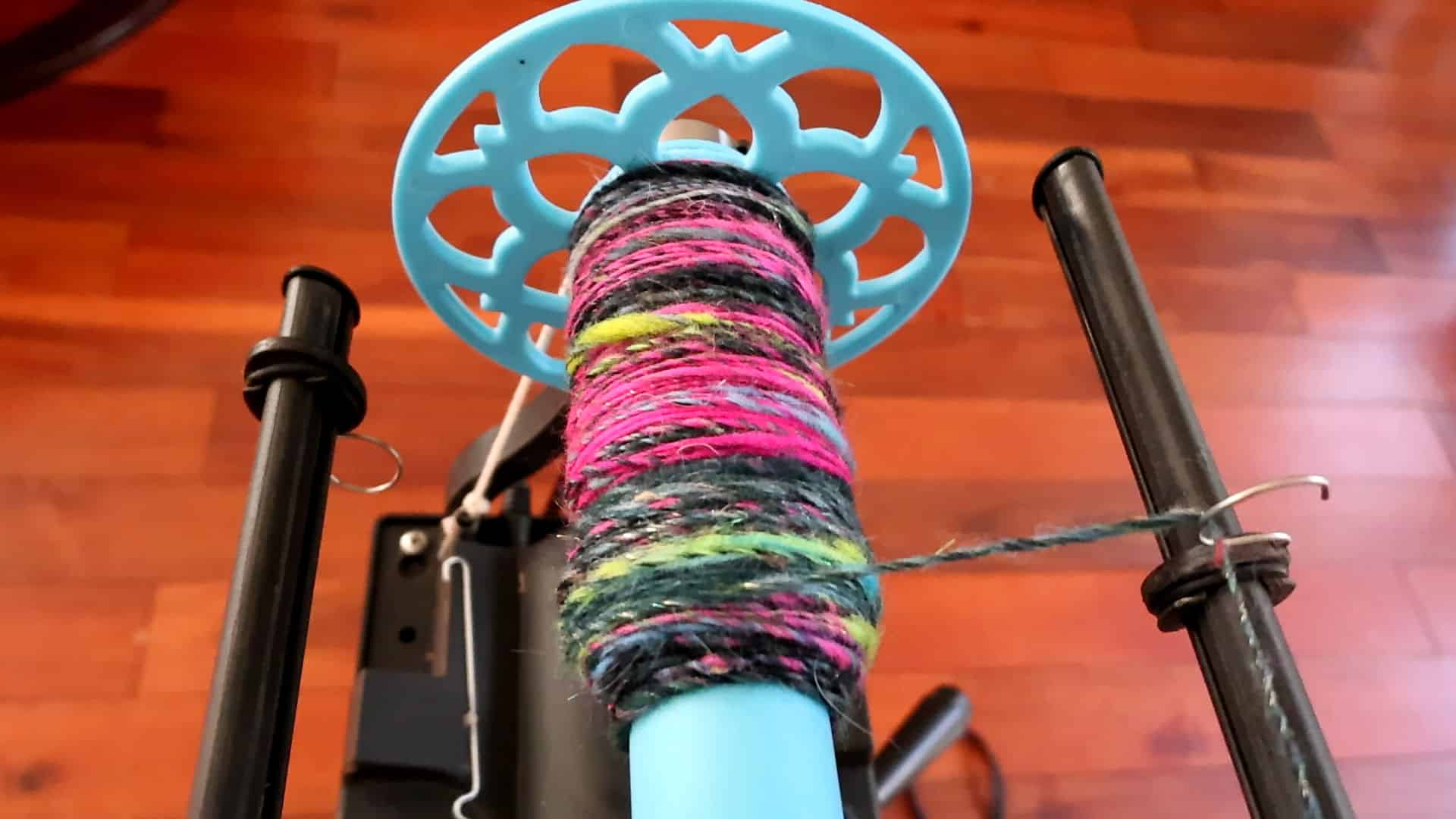
A close-up of a spinning wheel bobbin wrapped with colorful yarn, mostly black with pink, green, and yellow strands. The bobbin is bright blue with a decorative end, and the spinning wheel sits on a wooden floor.

The time has come to spin the textured batts and textured rovings from my previous posts for your spinning inspiration.

I make these posts for two reasons: to challenge myself, and ultimately, to give spinning inspiration to you, hand-spinners out there. We all get stuck in a rut; hopefully, I can get you out of it, even if this style of spinning isn’t your cup of tea.

My Journey to Spin (and love!) Textured Fiber

Messy. Chaotic. A vomit of color. If you prefer to spin top, chunky textured fibers and batts are probably not for you. Or is it? Let me show you what I have done recently with the handmade chunky batts and textured rovings I made in previous YouTube videos.

When I started spinning, I was drawn to the textured art batts that push the envelope. Spinners adding bits of fiber like silk, wool locks, re-purposing pieces of handspun yarn, and spinning these into yarn with the addition of objects like beads or artificial flowers – these are the handspun yarns that inspired me to learning to spin. I wanted to make art with fiber. Not to say all handspun isn’t art – because it is. I mean, I really wanted to make avant-garde yarn that you could wear or hang as artwork; that was my goal.

But as my knitting evolved, so did my spinning. I still love a funky art batt, but in a more toned-down way: less bulky yarns and more worsted-weight or thinner.
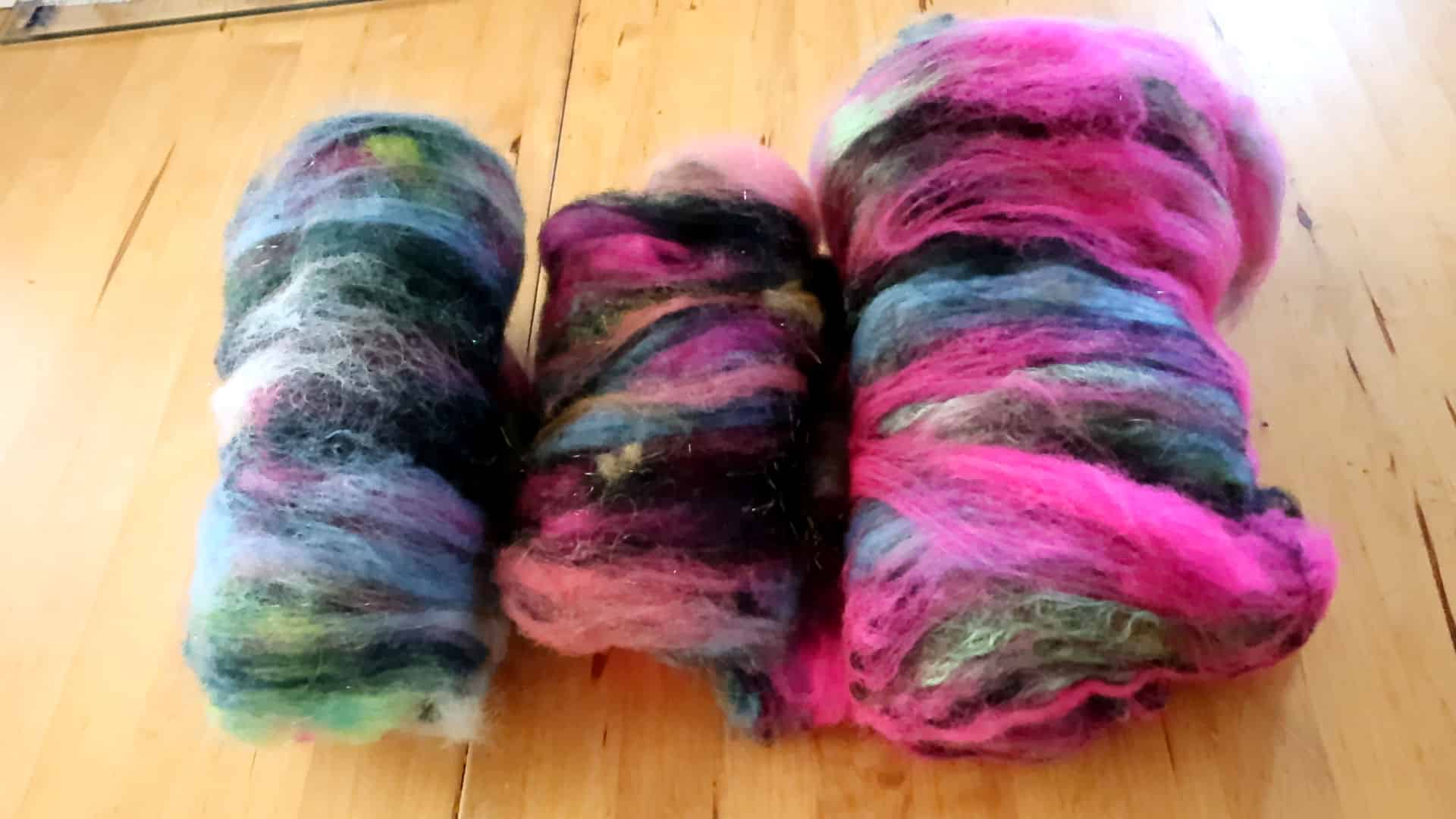
Three rolls of colorful, fluffy carded wool batts rest on a wooden surface. The wool blends vibrant shades of pink, blue, green, black, and purple in a soft, textured swirl, ready for spinning.

Above: three small batts I blended on my drum carder using leftover hand-dyed wool from other projects, with the addition of angora and silk, Angelina, and other fibers.

Below: Part One of spinning the textured fiber from past videos.

For Your Spinning Inspiration: Textured Fiber Part 1 & 2

Spinning the Textured Batts on my E-Spinner

I have two methods when spinning batts: ripping off chunks and spinning straight off the batt. I preferred spinning straight off the batt for these smallish batts. As they had no rhyme or reason color-wise, spinning off the batt meant I could control how much of each color could be spun at a time.
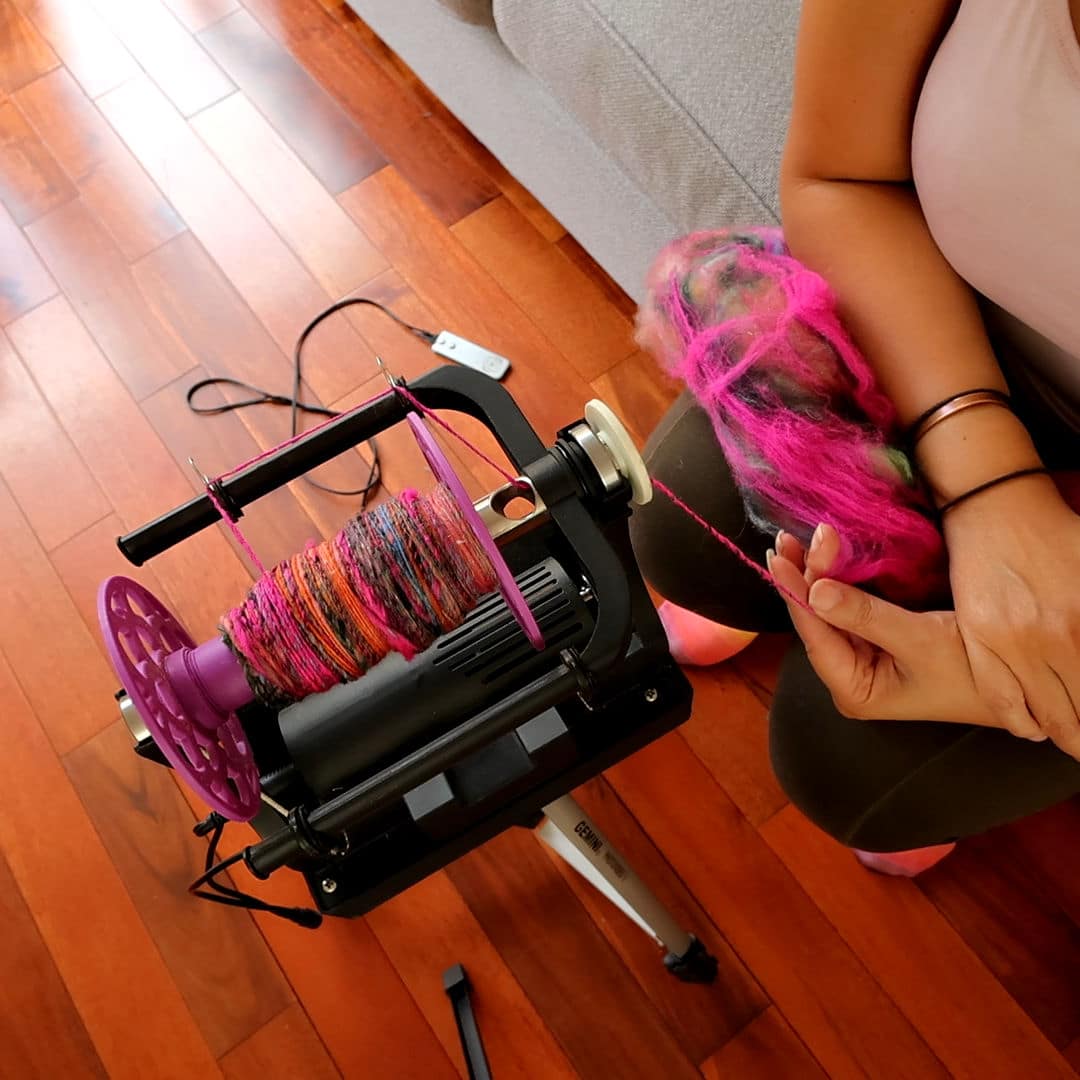
A person spins vibrant pink and purple wool into yarn using an electric spinning wheel on a wooden floor. The wool is draped around their arm, and they are holding the fibers where they are fed into the machine, which winds the yarn onto a purple bobbin.

Spinning these types of batts is never boring. If you want to watch color shift and develop before your eyes, these fun textured batts are truly satisfying. I don’t advocate you always spin this way (unless you want to – believe it or not, I don’t always!), but it is a great way to let your creativity run free and reset your brain for a more civilized spinning sesh. 🙂

Next: Tackling the Textured Roving

The other projects I was working on simultaneously to help kick your spinning inspiration in high gear is textured roving blended on my hackle. I had already spun the light green roving from my original how to use a hackle video, but could not find a suitable fiber to spin with it in my stash.

So I decided to do a smooth hackle blend for comparison with the textured roving, and spin them both together (with Mr. Peanut’s help, it seems).
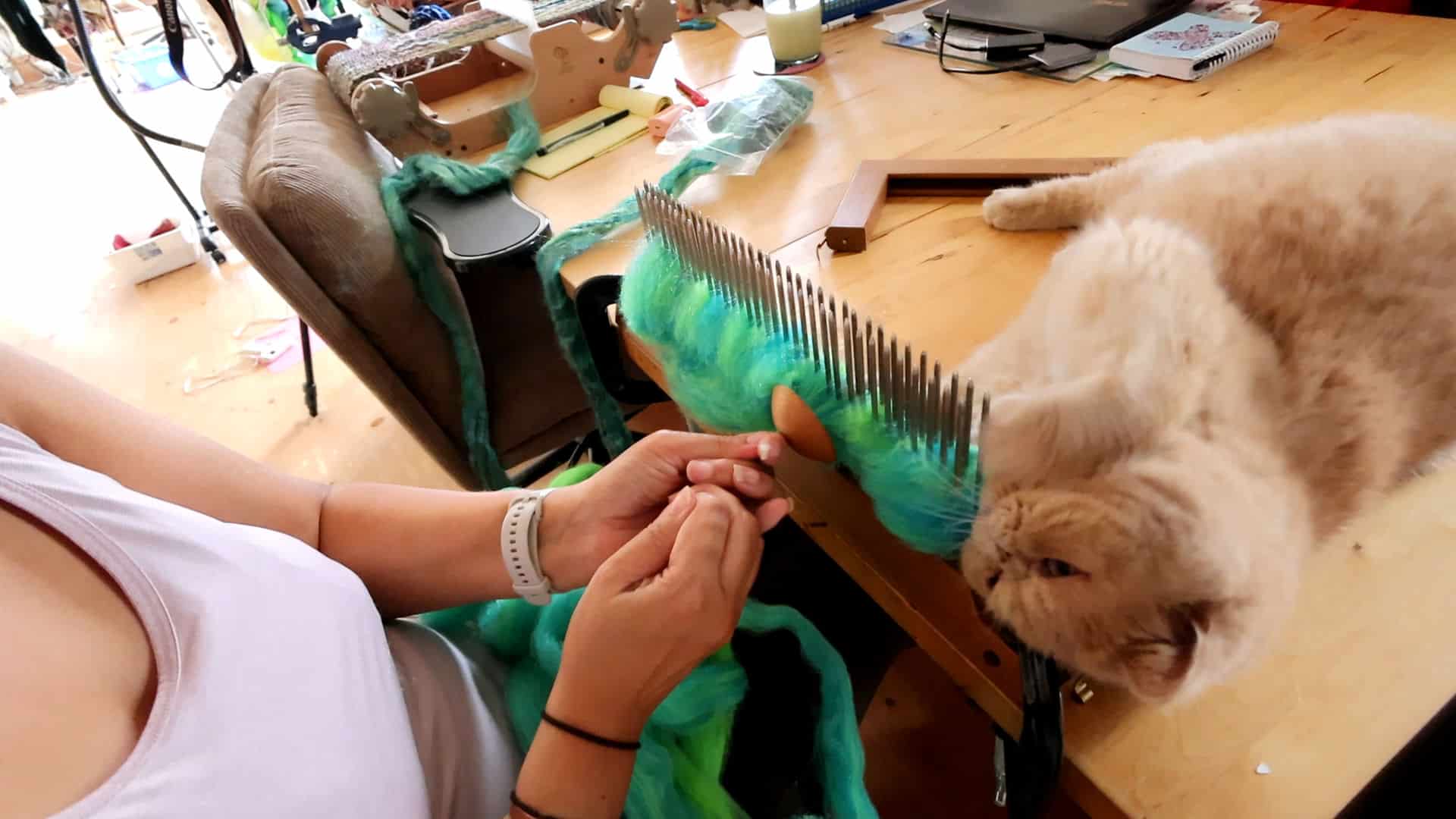
A person uses a wool comb to blend green and blue fibers at a table. A cream-colored cat lies nearby, sniffing the wool, with various crafting tools and supplies scattered in the background.

Although I used similar, almost identical fibers & colors, the contrast of a smooth blend vs. a side-by-side chunky blend was fascinating. The smooth blend was nearly a homogeneous color. I created a 3-ply yarn by plying these two fibers spun as separate singles with a bamboo singles. I found some bamboo roving in my stash that I had dyed similar colors.
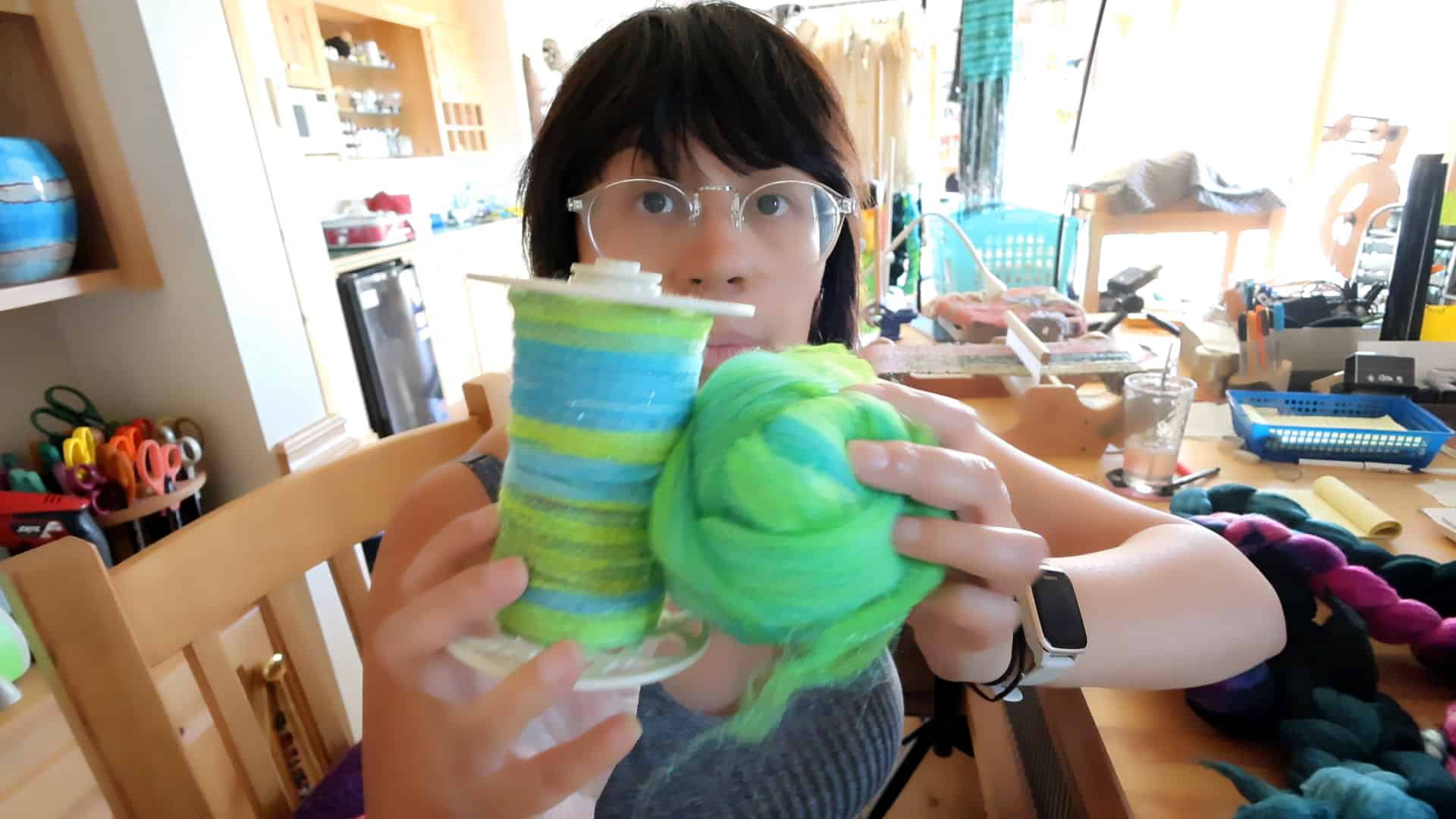
A person with glasses and dark hair holds up a spool of blue and green variegated yarn in one hand and a matching ball of fiber in the other. They sit at a table in a brightly lit craft room with supplies and colorful materials around them. The photo was taken in part to compare two different blends of wool fiber on a hackle for spinning inspiration.

Above: comparison between the original textured hackle fiber, blended side-by-side, and the smooth, evenly blended hackle roving.

You can watch Part Two below to see the final created yarns.

The video also featured the spruce green textured fiber, which I made into a 3-ply by dividing this bobbin into two and plying it with some spruce-colored Merino top that I also dyed.

This particular yarn is the epitome of the textured yarn I strive to create. Soft, squishy with lots of interesting inclusions with bits of sari silk, Angelina, angora and other colors of bits of wool roving.

I adored the finished yarn despite the singles reminding me of an artificial Christmas tree! The 3-ply yarn would look great paired with a solid color or on its own, giving me lots of options for a unique finished project. As I always say, never judge a handspun yarn until it’s finished. 😉
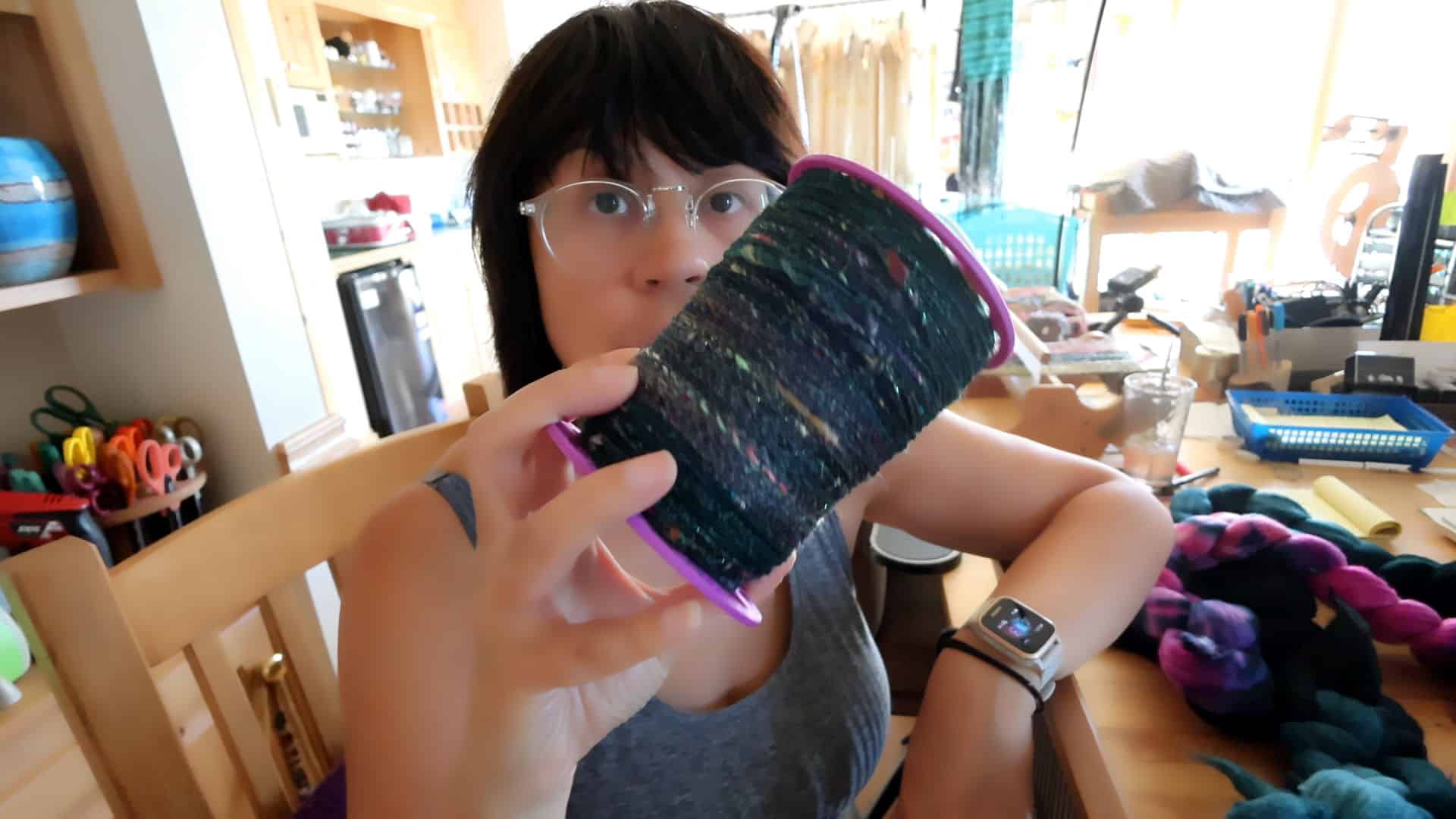
A person with glasses and dark hair holds up a large spool of multicolored yarn in a well-lit, cozy craft room filled with supplies and tools. They wear a smartwatch and a sleeveless gray top, focusing on the yarn.

This was a large project for me, spanning two months, during which I dyed and blended most of the fiber from scratch or pulled from my stash from previously hand-dyed projects. It definitely was wearing on both my body and attention span. But it is also so rewarding to push myself to create yarn outside of just spinning from straight top or raw combed fiber in colors that I am comfortable with.

I hope my experimenting helps you with your creativity and provides you with lots of spinning inspiration. 🙂

Leilani signature

Textured Chunky Batts on a Drum Carder

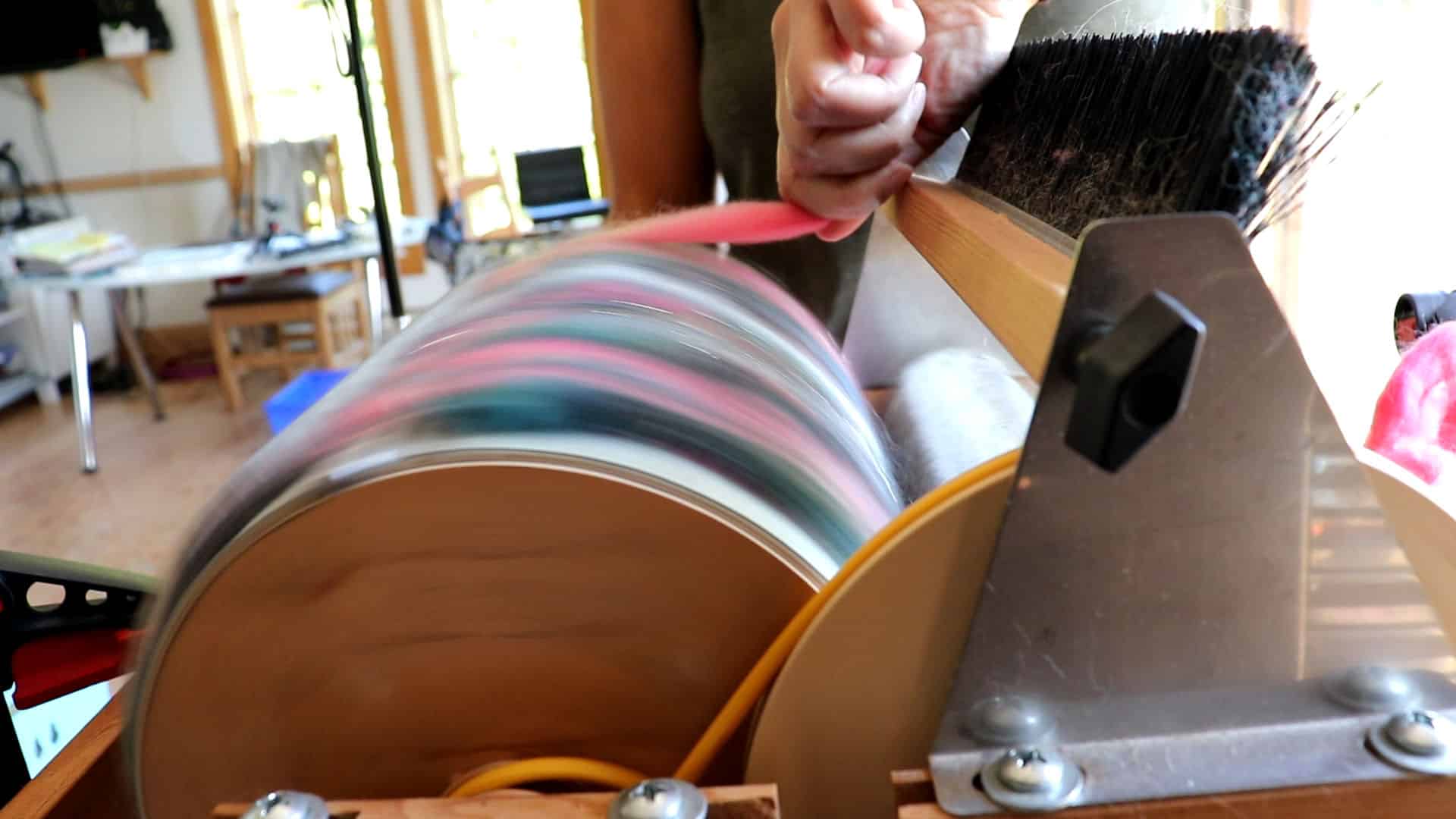
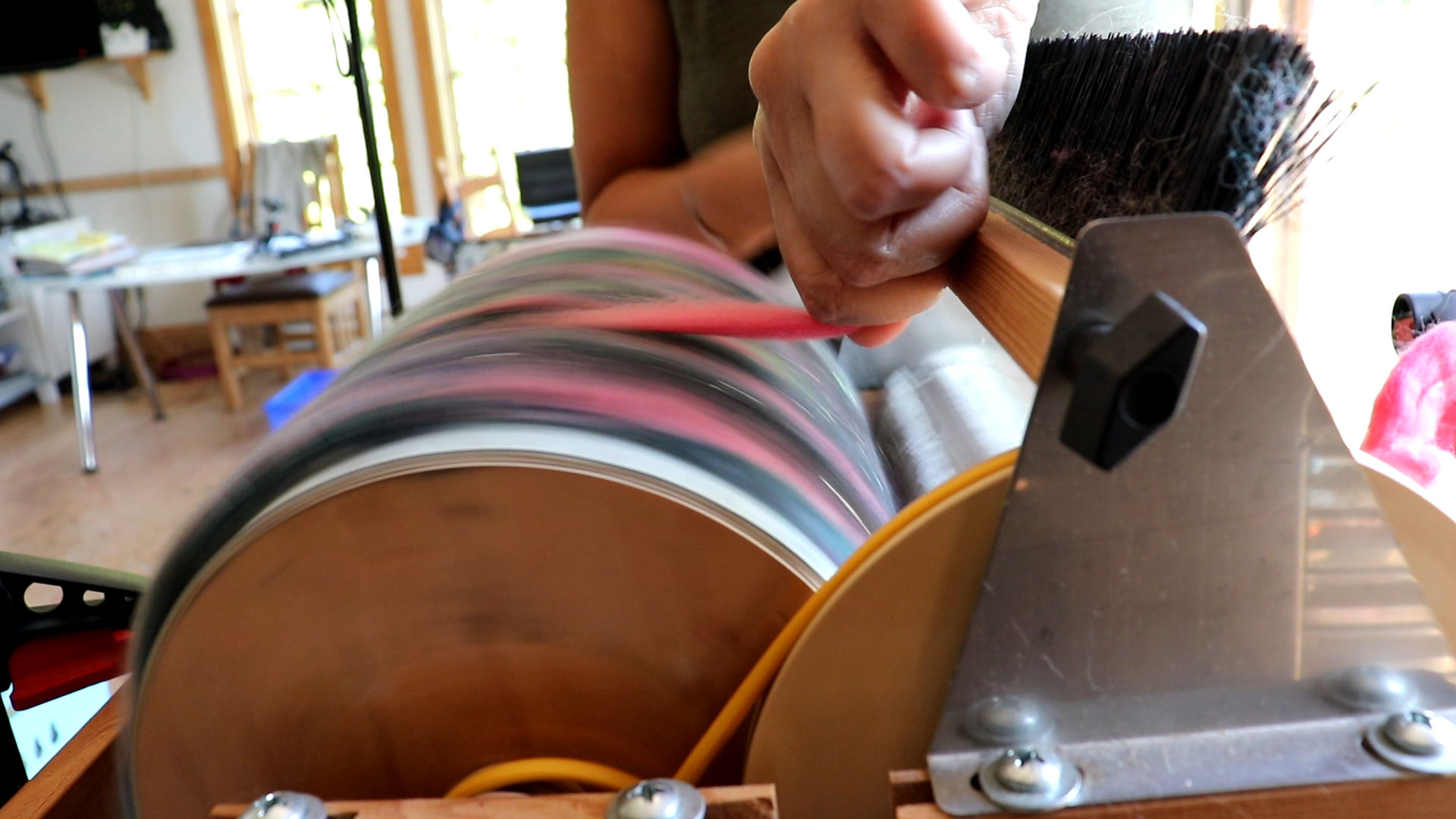
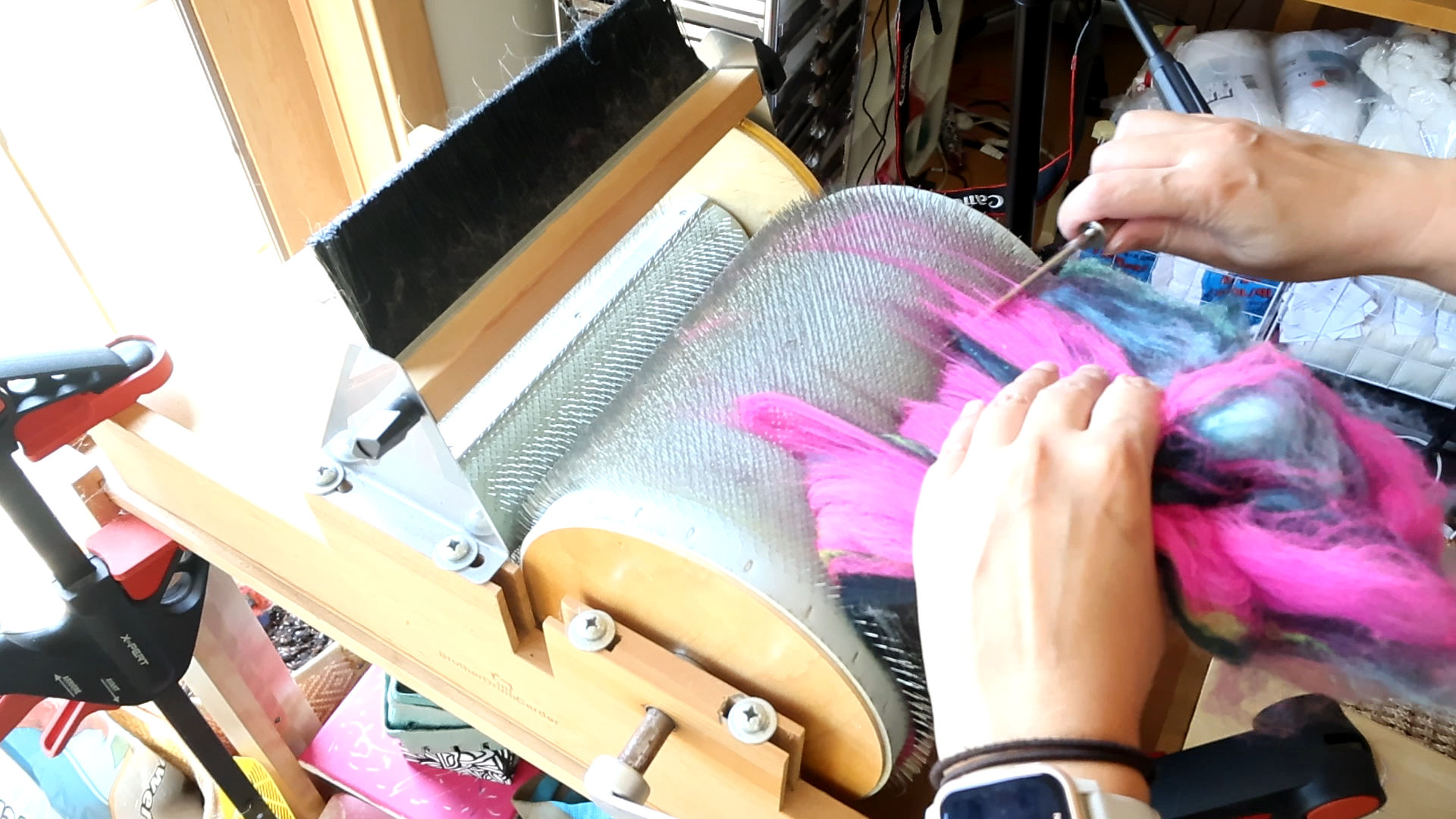
A close-up of a person using a fiber carding machine with a spinning drum. The person holds pink fiber against the drum, blending colorful wool fibers. Workshop tools, and daylight are visible in the blurred background.

I’ve owned my Brother Drum Carder for ten, if not 12 years. At the time, it was considered the most affordable drum carder on the market. Although they are still in the cheaper category drum carder wise, the price has increased significantly (what hasn’t?!), which makes me wonder who is affording a drum carder these days!

That said, I wanted to create a video showing how I make textured batts on my drum carder, which I feel very privileged to own these days, given the current economic climate.

Batts vs. Rovings

This post is a companion post to textured blending with a hackle, which is a more cost effective way to texture blend fiber for spinning. I really enjoy my hackle and use it more than my drum carder, though I must say, I do like having the option of using either.

By the way, although this post showcases making batts, you can also use a diz to pull rovings off the drum carder just like with a hackle.

A close-up of a hand using a drum carder to process wool fiber. The drum is spinning, blending colorful fibers, while a hand feeds wool in and another holds a wooden tool with a brush, combing the fibers. Workshop equipment and natural light are visible in the background.

The Wrong Carding Cloth

When I decided to get a drum carder, I really didn’t have that much experience with one, well, I had none really. Just what I saw at wool shows and online as other people demo’d them. It just made common sense to me to have one since I was doing my own fiber processing. I really didn’t understand the different carding cloths and what would suit my needs. So I went with a medium carding cloth, because it’s right in the middle. So that should be precisely what I need, right?

For blending traditional style batts, either out of top or raw (scoured) fiber, the medium cloth is perfect. What I wasn’t expecting was that the batts I preferred to spin were chunky and textured. I should have known, since I was always drawn to the bulky, funky, textured art yarns. You would think I would have realized that I would need a course carding cloth. But noooo…

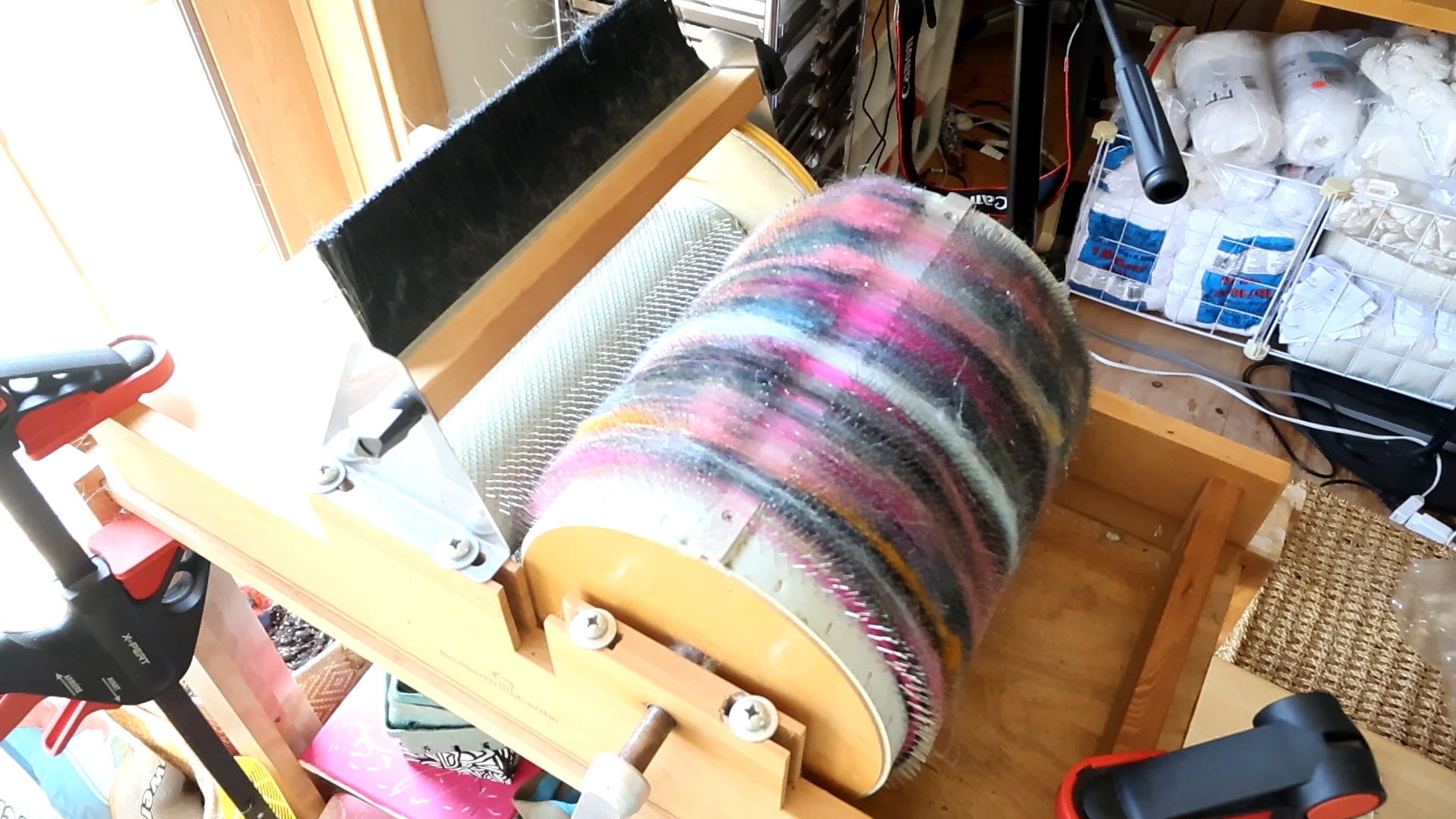
A drum carder loaded with colorful, blended fibers in shades of pink, purple, white, orange, and black sits on a wooden table. Various crafting supplies and equipment are visible in the background.

Stuck with a medium carding cloth but the desire for chunky batts, what should I do? The easiest and most obvious solution is to buy another carding cloth. But truthfully, by that time I had purchased quite a bit of fiber tools, including another spinning wheel (of which I have four now…two were used, okay? 😉 ). I didn’t want to spend any more money.

A person uses a drum carder to blend pink, blue, and black fibers for spinning. Their hands guide the fibers off the carding drum using a doffer to remove the fibers. Sunlight streams in from the left, and various tools and yarn are visible in the background. The person wears a smartwatch.

An Unexpected Solution

One day, I was blending some silk and became frustrated with how the carder was up-taking the fiber. Too much was going on to the licker-in (the smaller drum). I wasn’t happy with cleaning the licker-in with perfectly fine-to-use silk fiber, and feeding it through again and again. I also couldn’t get the silk divided and fed through so it would blend evenly.

So I got the idea to feed the silk directly onto the main drum while I cranked the handle slowly. And lo’ and behold, this worked wonderfully! I could place the silk wherever I wanted, and it blended just to my liking. I got to thinking: could I make chunky, textured batts this way?

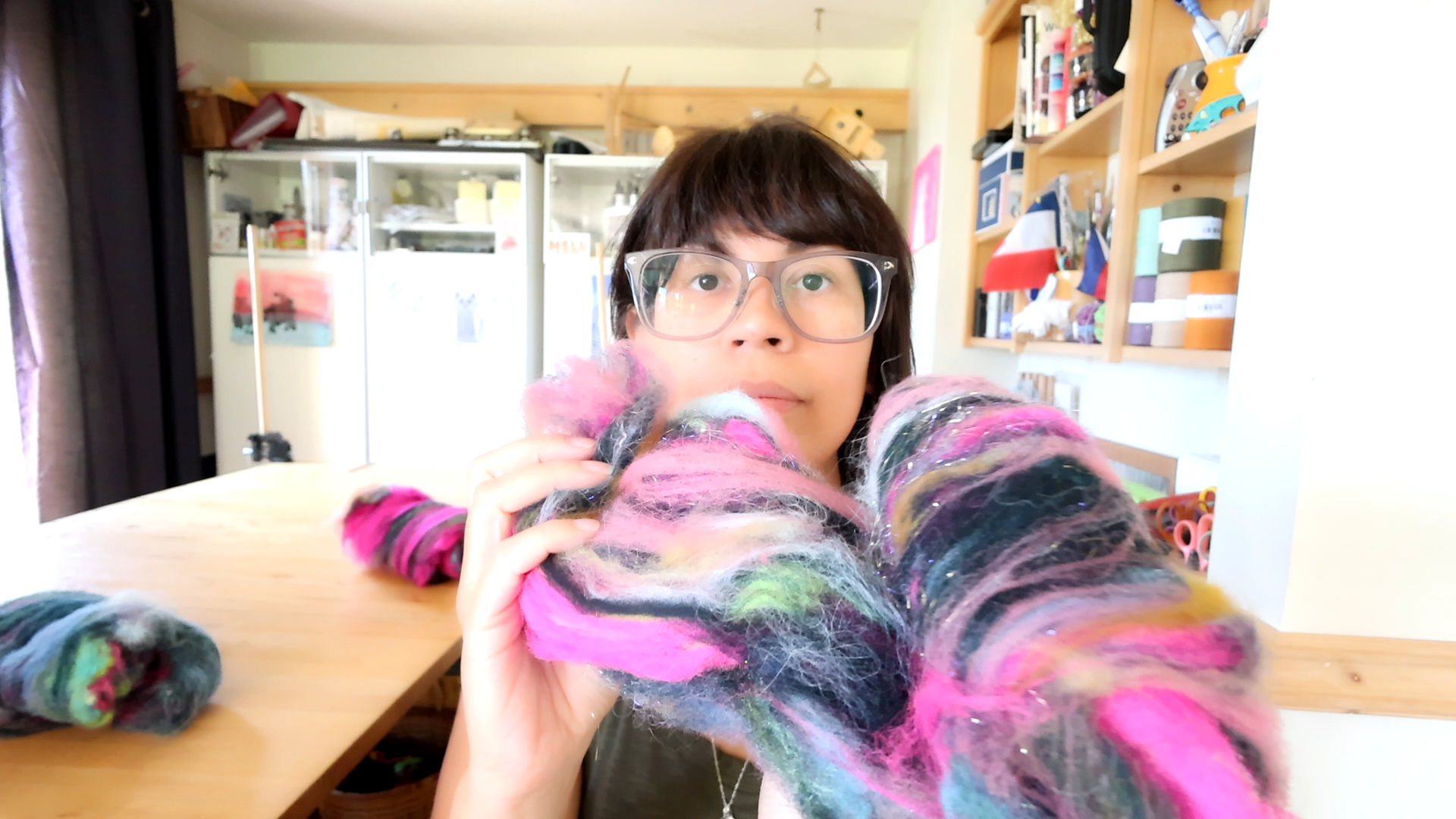
A person with glasses and short dark hair holds up a colorful wool batt with pink, blue, green, and black fibers in a bright, cozy craft room filled with shelves, supplies, and a wooden table.

And so this is how this technique was born: a way to achieve a textured chunky batt without a coarse carding cloth.

Watch the Video Demonstrating the Technique

To demonstrate how I make textured chunky batts I set out to blend random bits of fiber left over in the studio.As the fiber chosen is all very random, the batt colors are…interesting to say the least.

The subsequent batts are a blend of many colors of hand-dyed merino roving, angora rabbit fiber, silk and Angelina fibers.

Should you purchase a Drum Carder?

Do you need a drum carder? I’m still an advocate for a hackle over a drum carder, particularly in terms of affordability for blending fiber. However, if you ever get your hands on one or have the opportunity to use one at your local guild, keep this method in mind if you want to create a textured batt. Just be sure to go slowly and not force the fiber on, as you might bend the teeth; however, all drum carder teeth will wear out eventually.

If you’ve ever tried this technique or a similar one, please drop me a line here or on YouTube and share your thoughts. I’m sure I’m not the only person who’s thought of loading fiber on the drum directly. 🙂

Leilani signature